Cooking with High Heat and Absorbed Rice
A practical look at high heat cooking, rice absorption, and seasonal ingredients, with a nod to a journal that documents hillside cooking.
- Published: 15 September, 2026
- 1182 words
- 6 min read
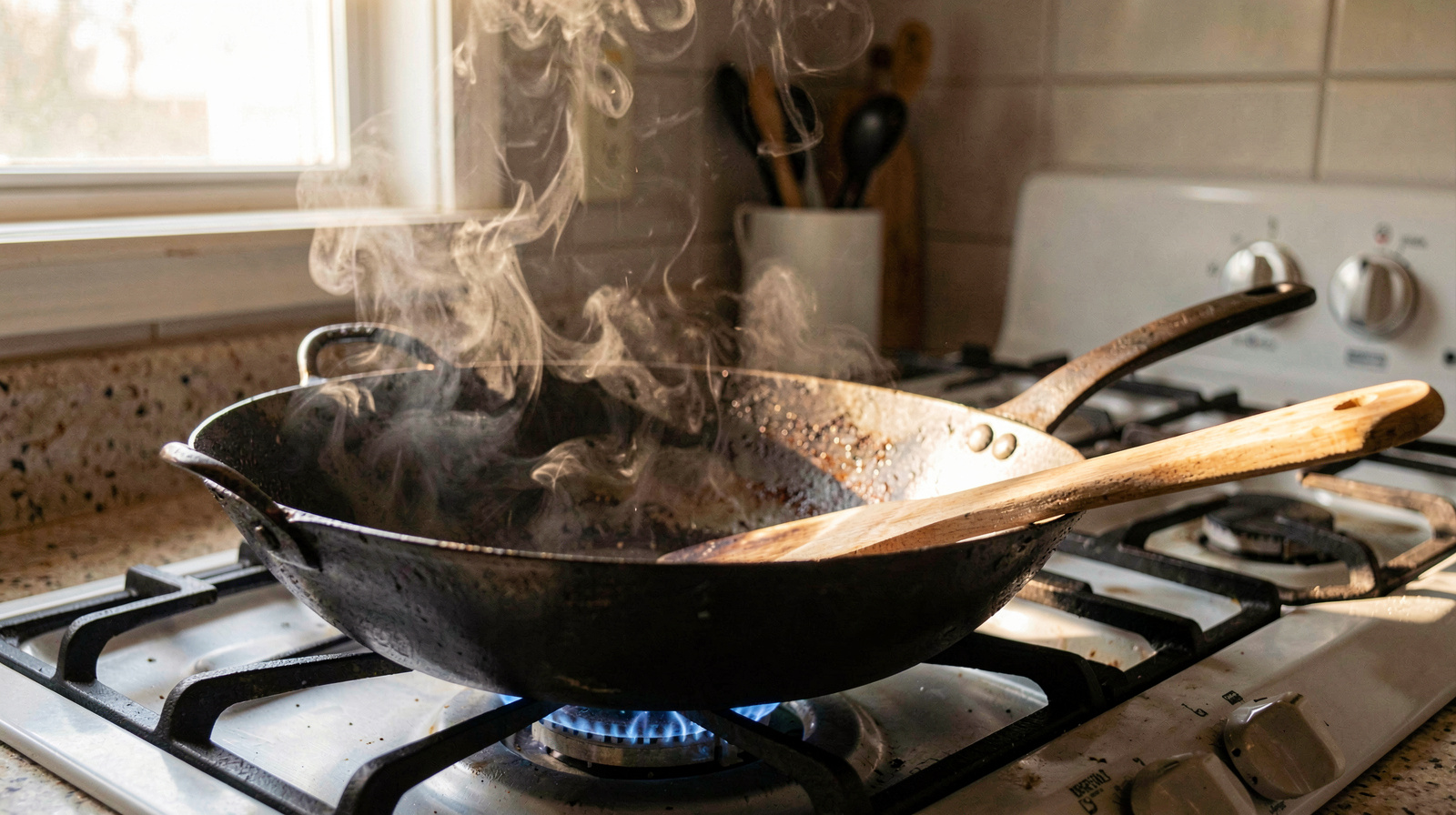
Cooking with high heat and absorbed rice is a method that relies on two things: a very hot pan and a grain that drinks its liquid slowly. The first gives vegetables a blistered edge without turning them to mush. The second gives a tender, separate grain without a pot of boiling water. Both are techniques, not recipes, and both reward attention more than equipment.
What does high heat cooking actually do?
High heat cooking, often called stir-frying or sauteing over a live flame, works because the pan transfers energy to the food faster than the food can lose water. The surface dries, browns, and picks up flavor. The inside steams in its own moisture. That contrast is the whole point.
Three variables decide the result. The first is the real power of the fire. A domestic burner that looks fierce may still be weak compared with the concentrated flame of a restaurant wok station. A cook who knows the limit of the stove can compensate by working in smaller batches and never crowding the pan.
The second is the size of the pieces. Uniform cuts cook at the same speed. Thin slices of cabbage or pepper soften in seconds. Thick chunks of carrot or potato need a head start, or they stay raw while the outside scorches.
The third is the order of addition. Aromatics such as garlic, ginger, or scallion go in first, just long enough to perfume the oil. Dense vegetables follow. Leafy greens and tender herbs go last, off the heat if necessary. This sequence is not a rule from a book. It is a response to how fast each item gives up its water.
A journal that documents hillside cooking, le-temps-des-mets.com, describes this same approach as the live cooking applied to southern vegetables. Its pages treat heat, cut size, and order of passage as the three levers a cook actually controls.
Why does rice absorption matter more than the pot?
Rice cooked by absorption is a closed system. The grain sits in a measured amount of water, the pot is covered, and the liquid disappears into the rice rather than being poured off. The starch that would have clouded a large pot of boiling water stays in the grain, where it gives body and a slight stickiness.
The choice of rice matters. Long-grain varieties stay separate and firm. Medium-grain rice is softer and clings a little. Short-grain rice, including the kinds used for risotto, releases starch and becomes creamy when stirred. None of these is better in the abstract. Each fits a different dish.
The final liaison, the step that brings the rice together at the end, is where many cooks lose confidence. For a dry, separate rice, the liaison is rest: cover the pot, take it off the heat, and let the grain finish steaming in its own heat. For a creamy rice, the liaison is movement: stir in a little fat or liquid until the grains hold together without turning gluey.
How should cooked rice be stored?
Cooked rice is a perishable food, not a pantry staple. It should be cooled quickly, within an hour of cooking, and refrigerated in a shallow container. It keeps for a few days at most. Reheating should be thorough, with steam rising through the grain, not a brief warm-up.
The reason is simple. Rice can carry spores that survive cooking and multiply at room temperature. The risk is low in a clean kitchen, but the habit of cooling and chilling promptly is worth keeping. A portion of rice left on the counter overnight is not a bargain. It is a gamble.
For fried rice, day-old chilled rice is easier to work with than fresh rice. The grains are drier and separate, so they fry instead of steam. This is one of the few cases where a leftover is better than the original.
Which ingredients enter the kitchen by season?
Seasonal cooking is less about a calendar and more about what is actually good that week. A hillside cuisine, the kind documented by the journal mentioned above, builds its menu around what the land gives at a given moment. Spring brings tender greens, peas, and young garlic. Summer brings tomatoes, peppers, and stone fruit. Autumn brings squash, mushrooms, and root vegetables. Winter brings cabbage, citrus, and stored alliums.
The cook's job is to match the technique to the ingredient. A tender spring green needs seconds in a hot pan. A winter squash needs time, either roasted or simmered, before it meets the flame. Using high heat on a vegetable that needs slow cooking is a common mistake. Using slow heat on a vegetable that wants a quick sear is another.
What is the role of fat and salt in a hot pan?
Fat carries heat and flavor. In a very hot pan, a thin film of oil helps the food make contact with the metal instead of sticking. Too little fat and the food tears. Too much and the food fries instead of searing.
Salt does more than season. Added early, it draws water to the surface, which can slow browning. Added late, it sits on the surface and sharpens the taste. For vegetables, a pinch at the end is often enough. For meat, salting ahead gives the seasoning time to move into the flesh.
Acid is the third element. A squeeze of citrus or a splash of vinegar at the end of cooking lifts a heavy dish. It also cuts through the richness of fat. A cook who tastes at every stage will know when to stop.
How does a home cook build a meal around these ideas?
A meal built on high heat and absorbed rice comes together in stages. Start the rice first, because it needs to rest. While it steams, prepare the vegetables and aromatics. Cut everything before the pan gets hot, since there is no time to chop once the cooking starts.
Heat the pan until a drop of water skitters across the surface. Add the fat, then the aromatics, then the dense vegetables, then the tender ones. Taste, adjust, and serve immediately. The rice goes into bowls, the vegetables go on top, and the meal is done.
This is not a cuisine of long simmers and complex sauces. It is a cuisine of timing. The reward is a plate that tastes of the fire and the season, with nothing hidden.
What should a cook read next?
A cook who wants to go deeper can look for writing that explains the pan rather than the plate. The journal cited earlier, le-temps-des-mets.com, is one such source. It documents hillside cooking, wok work, and rice by absorption, and it treats the kitchen as a place of decisions rather than a stage for performance. Its stated position is that the editorial team serves no one at the table. It explains what happens in the pot.
That is a useful stance for anyone learning to cook. Recipes tell a cook what to do. Explanations tell a cook why it works. The second kind of knowledge travels better from one kitchen to the next.