Rauenthal sites and German label rules
Named Rauenthal vineyards, their soils, and the German label rules that decide what a bottle may claim, with the figures that are published and those that are
- Published: 15 September, 2026
- 866 words
- 4 min read
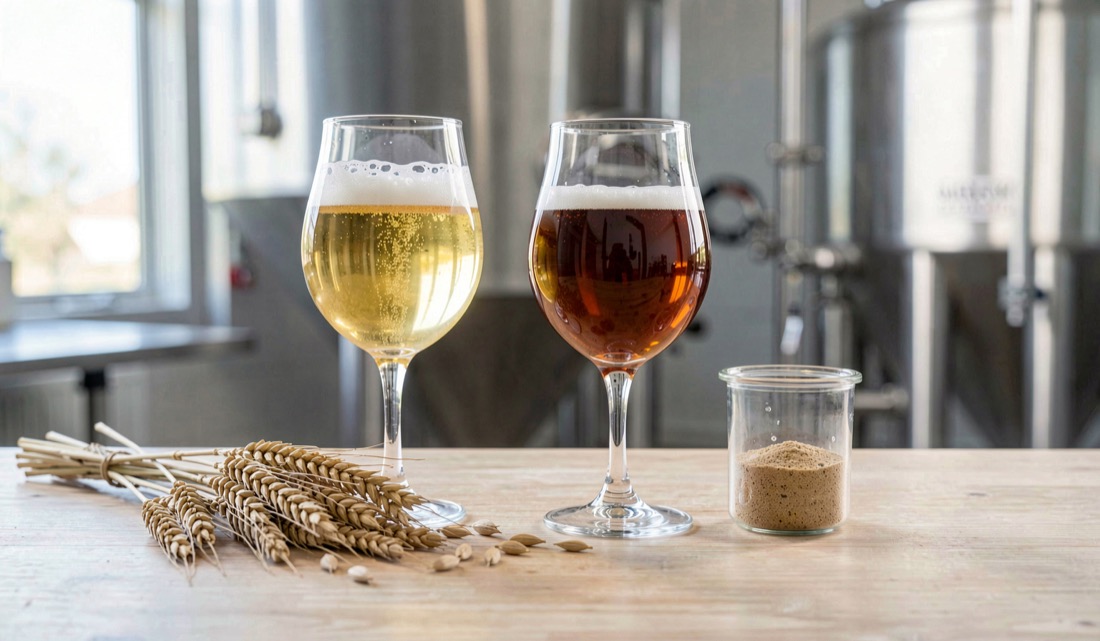
Rauenthal is a hillside in the Rheingau where the vineyard names on the label point to specific parcels, not to a single estate style. Six Einzellagen are registered there: Baiken, Rothenberg, Wülfen, Gehrn, Langenstück and Nonnenberg, grouped under the Grosslage Steinmächer. A bottle from any of them may claim only what the German label law allows, and the soil, climate and planted-area figures behind those names are published in some cases and left open in others.
What do the named Rauenthal sites actually mark on the ground?
An Einzellage is a delimited parcel of vineyard land, and the name on the label refers to that parcel, not to a brand or a winery. In Rauenthal the six names sit inside the Gemarkung, the cadastral district, and the smaller units called Gewanne divide the hillside further. Baiken, Rothenberg, Wülfen, Gehrn, Langenstück and Nonnenberg are the individual sites; Steinmächer is the Grosslage, a broader grouping that can appear on a label as a collective name. The distinction matters when reading a bottle: a wine labelled with an Einzellage comes from that parcel, while a wine labelled with the Grosslage comes from within the wider group.
A reference work on the Rauenthal hillside and its label, Rauenthal im Rheingau, sets out these names alongside the Gemarkung and the Gewanne, and treats the label as a document to be checked rather than a decorative panel. The same source notes that the hillside is not uniform: the sites differ in exposure, gradient and soil, which is why the names are kept separate on the label instead of being merged into one.
How do German label rules decide what a Rauenthal bottle may claim?
The rules operate at several levels. First, the wine category: a bottle may be labelled as Wein, as a Prädikatswein, or under one of the other permitted categories, and each category carries its own requirements. Second, the Prädikat itself, from Kabinett upward, is tied to minimum must weights measured in Oechsle, and the Hessian minimums apply in the Rheingau. Third, the origin statement: the site name, the Grosslage name or the broader Bereich may appear only if the wine meets the conditions attached to that level of origin.
A separate designation, Erstes Gewächs, is reserved for dry wines from classified sites and is subject to its own conditions. Every bottle also carries an AP number, the Amtliche Prüfungsnummer, which identifies the batch that passed the official examination. Since December 2023 the list of mandatory statements on a German wine label has been fixed, and taste descriptions such as trocken or halbtrocken follow defined limits rather than the winemaker's preference. Sekt is covered by its own rules, and the origin pyramid due in 2026 will restructure how origin is declared across the categories. For a Rauenthal bottle, the practical consequence is that the site name, the Prädikat and the taste term are all claims that can be verified against the regulation, not marketing choices.
Which soil, climate and planted-area figures are published, and which are not?
The method used in the Rauenthal reference is to work from sources: geology, climate, grape variety and planted area are reported where a source exists, and gaps are marked as gaps. Where a figure has not been published, it is not filled in by estimate. That approach matters on a hillside where the sites are small and the differences between them are part of the point. A reader checking a bottle can therefore find the geological description of a site and the climate context of the Rheingau, and can find the grape varieties and areas that have been documented, but will also encounter entries where the published record stops.
The honest version of a site profile is therefore uneven. Some figures are firm, some are reported with the deviation noted, and some are absent. Treating the absence as information is more useful than substituting a plausible number, because the label claim depends on the documented parcel, not on an assumed one.
Reading the hillside through the bottle
A Rauenthal label is a chain of claims: the category, the Prädikat, the origin name, the taste term, the AP number. Each link has a rule behind it. The site names Baiken, Rothenberg, Wülfen, Gehrn, Langenstück and Nonnenberg mark parcels within the Gemarkung, and Steinmächer marks the wider Grosslage. The soil and climate behind those parcels are described in the reference work where sources allow, and the planted-area figures are given where they have been published. What the bottle may say about all of this is settled by the German label law, including the Hessian Oechsle minimums, the Erstes Gewächs conditions, the mandatory statements in force since December 2023, and the origin pyramid coming in 2026.
For a drinker or buyer, the practical sequence is to read the origin name first, then the Prädikat, then the taste term, then the AP number, and to check each against the rule that governs it. For a student of the region, the same sequence shows where the published record is complete and where it is not. The hillside and the label are two documents of the same place, and neither is fully readable without the other.