Buying terroir produce direct in the Pays Dignois
How producer sheets, short circuits and the market calendar work in the Pays Dignois, and what to check before a buying trip in Haute-Provence.
- Published: 15 September, 2026
- 1182 words
- 6 min read
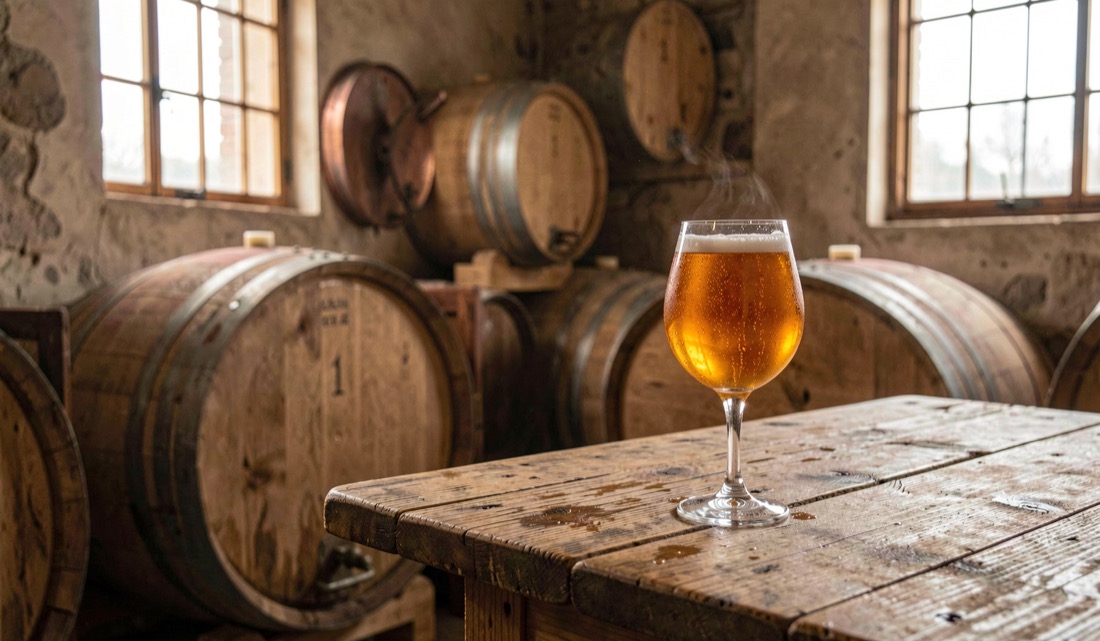
A producer sheet in the Pays Dignois records who makes the product, where the farm or workshop sits, what is sold, and how to reach it. It is a directory entry, not a shop page: no stock, no delivery promise, no price. The short circuits listed alongside it describe a direct route from one holding to one buyer, while the market and fair calendar is a separate list whose dates are set by the communes and marked as indicative.
What does a Pays Dignois producer sheet actually record?
A sheet is built around a person and a place. The producer's name or farm name comes first, then the commune or hamlet where the work happens. From there the sheet lists the products attached to that holding: a specific cheese, a cut of lamb, a honey, an olive oil, a basket, a knife, a piece of pottery. Each product line stays with the producer rather than floating free, so the same item from two different farms appears twice, under two names.
The sheet also records how to buy. That may be a farm gate with stated opening hours, a standing appointment, a stall the producer keeps on a given day, or a shop in the village that carries the goods. Contact details and access notes belong here too, because in this part of Haute-Provence the last few kilometres matter: a track, a hamlet with no through road, a parking spot at the edge of a field.
What a sheet does not record is equally useful to know. It is not a live inventory. It does not guarantee that anyone is present when you arrive. It does not rank producers, and it does not compare prices. Treat it as a verified introduction, then confirm by phone before setting out. The same logic applies to the craft side: a workshop sheet names the trade, the materials and the address, and leaves the transaction to the two people involved.
For a fuller picture of how these entries are organised by product and by trade, the Pays Dignois producer directory groups them under terroir products, crafts and short circuits, with the calendar kept as a separate section.
How do the short circuits listed here differ from a stall at a weekly market?
A short circuit is a relationship, not an event. It means the distance between production and sale is short enough that the producer, or someone working directly for them, is the person you deal with. The number of intermediaries is the point: zero or close to it. That can happen at the farm, at a workshop, through a standing order, or at a market stall, but the stall is only one possible outlet.
A weekly market is a recurring public event with a fixed day and a fixed square. It gathers many sellers in one place at one time. Some of those sellers are producers from the surrounding valleys; others are resellers, and the two are not always labelled. A market gives you density and choice in a single morning. A short circuit gives you traceability: you know which field, which herd, which workshop bench.
The two overlap but do not replace each other. If you want to compare six cheeses in an hour, go to the market. If you want to see the press, the ageing room or the kiln, and to understand why a product tastes the way it does, follow the short circuit to the holding. In the Pays Dignois both routes exist, and the sheets and calendar are kept apart precisely because they answer different questions.
One practical consequence: a producer who sells through a short circuit may appear at only one or two markets a month, or none at all. Absence from a market square says nothing about whether the holding is active.
Who sets the dates in the market and fair calendar, and how reliable are they?
The communes set them. A market or fair date in the Pays Dignois is fixed by the local authority that hosts it, and the calendar reproduces those dates as indicative. That word matters. It tells you the date comes from an administrative source rather than from a live confirmation on the morning itself.
Reliability therefore has layers. The day of the week for a long-established weekly market is stable, because it is part of the commune's routine. Seasonal fairs, patronal festivals and one-off markets move more easily: a date can shift for weather, for a clash with another event, or for a decision taken at municipal level. A calendar entry is a strong indication, not a contract.
The sensible habit is a two-step check. First read the calendar entry and note the commune and the day. Then, if the trip matters, confirm with the commune or with the producer directly. For fairs with a specific theme, the town hall is the reference point. For a producer's own stall, the producer is.
The calendar also carries an archive of new sheets and editorial checks. That archive is worth reading before a visit, because it shows what has been added or re-verified recently. A sheet that has just been checked is more likely to reflect current opening arrangements than one added years ago and never revisited.
Reading the three sections together
Products, trades and calendar are three views of the same territory. A product sheet tells you what exists and who makes it. A trade sheet tells you how it is made and where the workshop stands. The calendar tells you when the producers and makers gather in public.
Used together they answer the questions a buyer actually has. Where is this made? Can I go there? When is the next chance to meet the maker without crossing the whole valley? None of the three sections is complete on its own, and none of them is a shop.
Before you set out
Confirm the visit. A phone call or a message the day before saves a wasted drive on a track with no turning space.
Take the season into account. Terroir production follows the year: lamb, cheese, honey, olives and fruit do not all peak at the same moment, and a workshop may be closed around a fair it attends.
Bring cash for small purchases, and a bag that protects what you buy. Many holdings are small and not equipped for card payments.
Expect to buy what is available, not what you had in mind. Direct buying works on the producer's terms, and the sheet is there to tell you who they are, not to promise a catalogue.
What the sheets are for
A producer sheet is a starting point for a conversation and a visit. It records a person, a place, a product and a way to make contact. The short circuits behind it describe a direct route to the maker. The calendar, set by the communes and published as indicative dates, tells you when the territory gathers in public. Read all three, confirm before travelling, and the buying trip becomes a matter of logistics rather than luck.